
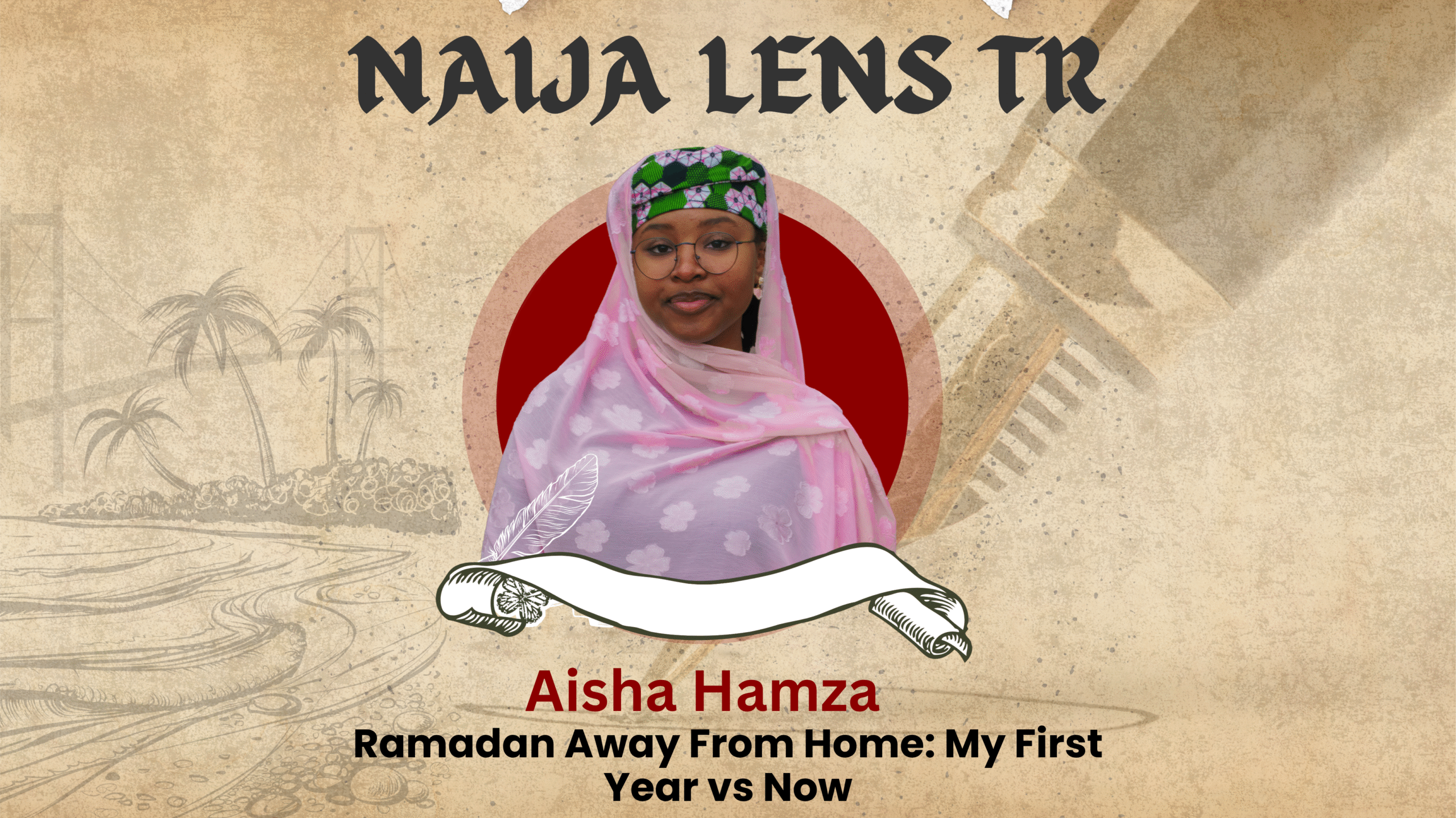
About the Author
Aisha Hamza,a native of Katsina, was born in Kano State, Nigeria. She is currently pursuing a degree in Public Relations and Advertising while exploring interests in media, communication, and social issues, with a keen interest in social justice, particularly feminism, women’s liberation, gender equality, and the fight against oppression and violence directed at women and children. Through her writing and future media projects, she hopes to contribute to conversations that promote dignity, justice, and empowerment for marginalized voices. She is a writer, part-time English teacher, and aspiring podcast host who enjoys using her voice to share ideas and experiences. Alongside her academic pursuits, Aisha is deeply interested in creative arts, including cooking, baking, photography, and various craft forms. Aisha hopes to build an international career that combines communication, creativity, and cultural exchange. She is particularly interested in exploring opportunities that allow her to travel, connect with diverse communities, and continue developing her voice in media and storytelling.
Once upon a time, it was 2022, and I was ready to begin university and had settled in a dormitory. Fast forward to a few months, and Ramadan began, not exactly the way I imagined it in my head, dare I say, gut-wrenching.
In the dorm, they would text us on the general group at 12 a.m. and call for “suhoor.” Meanwhile, Fajr was at 5:30 a.m. The gap was huge. By the time it was actually close to Fajr, my stomach would already feel empty again. And we were not allowed into the kitchen, so whatever they gave at 12 a.m. was it. Most times, it was just bread and tea. Now imagine having that at 12 a.m., waking up at 6 a.m. for school in the intense heat of spring. And honestly, that year’s spring was said to be the highest temperature documented in over a decade. Iftar was not until 7 p.m.A few of us were fasting, but most people were not, so there was a gap in understanding whenever we said we needed something more filling, something proper. To them, it was just food. To us, it was fuel for the next 19 hours I had to survive.
Eventually, I began buying my own groceries or ordering pizza at 12 a.m (´;︵;`). I would wake up around 4 a.m. and quietly eat something I had, just so I wouldn’t completely break down by midday. For iftar, I still had to order food most days because I was not used to Turkish meals at the time. Meals at home were often spiced up, but here I only had salt and pepper to deal with. Everything felt unfamiliar: the food, the environment, the rhythm of Ramadan, and, of course, the language. Even Taraweeh felt different. It was rushed. Everything felt fast. I struggled to connect. It felt like I was constantly adjusting instead of settling into the month. That first year taught me something I wasn’t ready to learn: faith feels very different when you don’t have community. There was no family. No shared iftar. No one checking if I prayed taraweeh. No one reminding me. It was just me and my bad character (≧ ≦) And I won’t lie it was lonely. After that year, I left the dorm and moved into an apartment. That’s when things slowly got better. I had a Nigerian housemate. We would take turns cooking for suhoor and iftar. Even though we prayed separately, just knowing someone else in the house was fasting made a difference. It wasn’t home, but it was easier. Looking back now, I realize that my first Ramadan here was a training period. It showed me what my faith looks like without support, without structure, without comfort. It exposed my weakness, but it also forced me to grow up spiritually.
Ramadan away from home is not always soft or fit the Instagram aesthetic. It is quiet, sometimes isolating, sometimes frustrating. But it is also deeply personal. And maybe that’s what makes it powerful.
Leave a Reply